Game. Blouses.

1206 comments

Prince - The Word

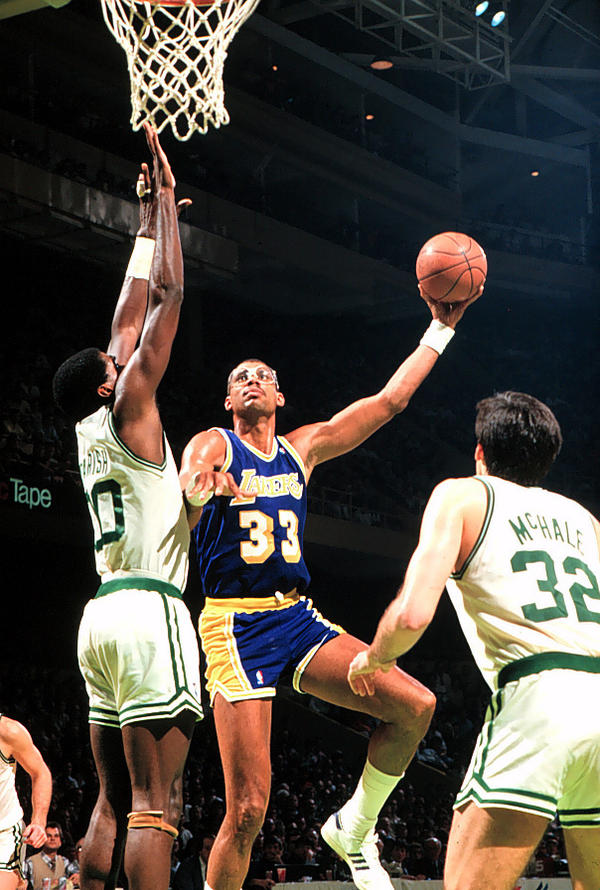
There was a commercial a few years ago that featured a montage of Michael Jordan, shooting a series of those last-second buzzer-beating jump shots that he was famous for. But the twist was that the commercial showed him taking shot after shot, over and over again... and missing. The point was a little corny but significant nonetheless: the key to what made Jordan so great was that he may have missed plenty but he had no fear in taking the shot. A sports metaphor may seem like an odd place to go in an mp3 blog, but you virtually have to look outside of the music world to find a comparison for Prince. The man is peerless. Not just in sheer output but, as his newest album 3121 demonstrates, in quality as well.

Prince is at a stage in his career now where the only person reviewers will ever compare him to is himself. Instead of discussing the album on its own merits or even comparing it to any contemporary pop or R&B albums, they feel the need to load down their blurbs with bullshit qualifiers like “his best since...” The vast majority of these reviews seem to have been written on auto-pilot, running through the same tired points – he once changed his name to an unpronounceable symbol, he released several disappointing albums in the 90’s, he has a confusing and often contradictory relationship with spirituality and sexuality, 2004’s Musicology was a “return to form”, he will never make another Purple Rain. I’m inclined to question the veracity, and especially the relevance, of most of these issues, but I’m not going to take the time to debunk them one by one. I’ll just tell you straight out – fuck what ya heard; the new Prince album is incredible.

3121 doesn’t sound like any other Prince record, but it sounds undeniably like Prince. Jeff and I saw him about a year ago on his Musicology tour and all the things that make him an unstoppable live performer (far and above the best I’ve ever seen) are apparent on this record. It’s funky, sexy, effortlessly cool. His current New Power Generation line up (principally: drummer John Blackwell, bassist Rhonda Smith, keyboard player Renato Neto and legendary saxophone player Maceo Parker) is stop-on-a-dime tight and Prince, nearly half a century old now, is still in fine form writing, producing, playing and showing off his inhuman virtuosic vocal range. I was torn between at least six different tracks to post today; the single “Black Sweat” is an otherworldly funk jam that I’m sure is going to be absolutely killer live and album closer “Get On The Bus” mashes soulful horn stabs, gospel shouts, Latin piano, old school break beats, and a dazzling Maceo solo into one barn-storming kitchen-sink party anthem. But, more than any other, the song I can’t stop listening to is “The Word”

Although it’s sequenced as the ninth track out of 12 on 3121, “The Word” feels like the centerpiece of the album. All the recurring lyrical themes and musical motifs are summed up smartly in its four minutes. Silky R&B sexuality with spiritual (but never preachy or heavy handed) lyrics and a laid back but danceable groove. Prince’s graceful songwriting expertise provides for a neat and tidy pop structure but his tendencies for eccentricity scatter the song with free form jazz improvisations, vintage conga funk breaks and moments of weird electro spazz outs. “The Word” alone should be enough to silence any insipid rhetoric that Prince is “stuck in another era” or somehow not contemporary sounding. The track is just as exciting, unconventional and sonically intriguing as any other pop star’s half-million dollar Neptunes or Timbaland beat.

Chris Rock recently made the assertion that in the old playground debate between who was better, Prince or Michael Jackson, Prince had won. But I think he was victorious in that conjecture a long time ago. Never content to rest on his laurels, Prince has always pushed forward, resisting trends and fads, making exactly the music he wants with little regard for what record labels or record reviewers have told him to do. He may have never made an album as big as Thriller, but he’s taken more shots and subsequently he’s hit more. 3121 is another game-winning swish that proves once again Prince, like Jordan, stands alone as simply the best at what he does.

(Click here to buy 3121 on Amazon.)


Lunar Missions in a Pontiac Grand Prix

1181 comments

Fastbacks - Gone to the Moon

Fastbacks formed in 1979, broke up in 2001, and went through over a dozen drummers along the way. Near the middle of their lifespan, in 1993, Kurt Bloch, Lulu Gargiulo and Kim Warnick, released "Gone to the Moon" as an EP single off their album, Zucker. I can't recall exactly, but I'm pretty sure I picked up the single in a bargain bin at Vinyl Solution.

While it was only a limited exposure to the sprawling career of these Seattle stalwarts, it was enough to make me look cool by including it on a mixtape or two. The great thing about Fastbacks is their uncanny ability to write a perfectly crafted pop song but still maintain an edge. And their influence on contemporary music cannot be stressed enough. While they may not be a household name in the States, at least outside of Seattle, Fastbacks is huge in Japan. And after their twenty-year run, it's hard to find any J-pop that isn't at least somewhat indebted to Fastbacks.

I saw an interview once with Nirvana and one of them described "Smells like Teen Spirit" as the "song the Pixies should have written." And while the Pixies certainly inspired cult-of-the-individualist lyrics, silly, strange, dark yet still poppy sounds, I prefer to think of Fastbacks as the major musical force that shaped the 90s rock scene. While the 'grunge' movement seemed to be pushed on us pretty hard by the record companies eager to find the next Nirvana, none of it stood the test of time (for me at least) except Nirvana. And Fastbacks is why.

Like Fastbacks' music, Kurt Cobain's musical taste was unabashedly eclectic and nearly entirely ignorant or apathetic about outside opinions. Here we find the middle ground between The Meatmen's harsh baked-in-the-desert-sun delivery, the songwriting skill of David Bowie, the contemporary application of the sacred American pop song, and the marginalized 'guilty-pleasure' of Shocking Blue.

It's a shame there won't be world-wide mourning when Kurt Bloch passes away... but maybe in Japan.

(Buy Zucker at Amazon)

(Photo by Charles Peterson from his book, Screaming Life)


E-40 - Automatic (ft. Fabolous)

According to KRS-One there are nine elements of hip hop: besides the essential four, MCing, DJing, Graffiti and B-Boying (break dancing), and the commonly accepted fifth, Beatboxing, The Teacha added street fashion, street knowledge, street entrepreneurialism and street language. And nobody better exemplifies that last element than Vallejo, CA rapper E-40. Earl Stevens is the linguistic ambassador of hip hop, the Bay Area legend the average listener has never heard of, responsible for a million white kids saying “Fo Shizzle” and “Fo Sheezy” and feeling “Hella” good so they can keep on dancing. Off his tongue hip hop slang is elevated to an art form.

A couple years ago E-40 helped out an unknown rapper/producer named Lil’ Jon by throwing him on a posse cut on his insta-classic album Grit N Grind, but sometime between then and now a song with Usher plus a series of skits on Chappelle’s Show equaled massive success for Lil’ Jon and now he’s returning the favor by signing E-40 to his Warner Brothers imprint label and executive producing his newest record, My Ghetto Report Card.

At first it’s a little disconcerting; E-40 has always flirted with the fringes of the mainstream, but has been running his own independent label Sick Wid It for over a decade, so it’s strange to hear him shouting out Warner Brothers on “Yay Area”, the opening track on his latest album. But I’ve never been one of these people to cry sell out when an artist I like makes the move to a major, so I’m not going to hate on E-40 for trying to get that scrilla. (After all, he invented that word too.) But I will say that although My Ghetto Report Card is good, for sure the best hip hop record of the year so far, nothing on it comes close to touching Grit N Grind. Especially that record’s shoulda-been hit single, “Automatic”.

Aside from his patented slangcabulary, E-40 is also famous for a ridiculously complicated tongue twisiting flow, and even though on “Automatic” he assured us he was going to slow down his spit so us squares could understand it, he still possesses one of the most unique voices in hip hop. Riding a bouncing future-funk Rick Rock beat with a cleverly interpolated nod to the Jacksons’ “Dancing Machine”, E-40 and young underrated pretty boy Fabolous put on a rhyming clinic. 40 manages to sound intelligent, funny and menacing all at the same time, dropping clever lines and hilarious slang with ease and, unlike a lot of underground rappers, with an uncanny skill for crafting hooks. And Fabolous shines bright enough that the impression you might have had of him from his R&B-hooked hip pop singles should be totally wiped clean. He’s still not saying much, but listen to the way he says it.

“I'm gettin' ticked off again/Ya'll must like ridin' in long black caddy's that they stick coffins in/The Click often been/Blowin' sticky that come in the same jars that they stick coffee in/I got chicks offerin'/But I play hard to get unless they suck me 'til my dick soft again.”

How many MCs could flow so casually in a rhyme scheme that complex and still manage to be funny?

And if I had to find a complaint with E-40’s latest record, it would be just that: it’s not very funny. All the other elements that I love about E-40 are present: the production is top-notch (and forget Lil Jon, it’s longtime producer Rick Rock that laces the album with its best beats), the flow is impeccable, the hooks are catchy and there’s plenty of new slang for the rest of the world to try to catch up with. But my favorite thing about E-40 has always been that, while working with traditional gangsta rap themes of drugs, sex and money, he always managed to infuse songs with a distinct sense of humor.

In his latest (and most successful, My Ghetto Report Card debuted at Number 3 on the Billboard chart) bid for mainstream appreciation, E-40 seems content in riding the newfound interest in the Bay Area hyphy movement he helped pioneer, and the pure fun and wit of tracks like “Automatic” gets left by the wayside. But E-40’s tenth full length album is still an impressive effort, and after you buy Grit N Grind I wouldn’t hesitate to recommend My Ghetto Report Card. To borrow another, albeit since discarded, phrase originated by E-40: “It’s all good.”

(Click here to buy Grit N Grind on Amazon.)


“Hey Mr. T! Are you trying to be punk rock?"

1142 comments

Roland Alphonso - El Pussy Cat
Roland Kirk - Roland's Theme
Roland Kirk - Triple Threat

Patrick's Jelly Roll Morton post got me thinking about my first jazz records and experiences and it's nearly impossible to pin it down to any one defining moment or album.

I used to listen the Ska Parade religiously every Saturday from noon to two while I did my weekly chores. Third-wave was just about to break and Tazy had yet to become infamous for 'discovering' Sublime's 'Date Rape.' I can remember responding to Roland Alphonso much more than Monique Powell. (Though I must admit playing 'Date Rape' for my Boy Scout buddies and loving it... At 14 you're at the perfect age for lyrics like "Even though he now takes it in the behind.")
So when the Jazz Band at my high school played during lunch in the middle of my Freshman year, I had no aversion to the horns or syncopated rhythms. And what's more, I thought these guys were the coolest. Perhaps it was an early indicator of my shifted notion of 'cool,' but somewhere between Band Geek and A.S.B. President the social strata of Butt-Rocker Music Nerd seemed like the place I wanted to be. Besides, Mr. Maddux, whom I had for Geometry at the time, was the teacher and I had seen him exchanging tapes with those longhairs in class and knew he was at least into Fishbone.

So over the summer I picked up the bass guitar and signed up for Jazz Band the following year. Maddux moved back to Seattle (I think it was Seattle, but that may have just been the mystical city of that era) and instead we got an already-spread-thin Marching Band instructor. (I'm pretty sure he ran every music program at our school.) It seemed like everyday he was on the verge of a complete nervous breakdown and for a while he rode us pretty hard. We played standards like Night Train, Harlem Nocturne, Misty and Take the 'A' Train. It was then I started to develop tastes for what I did and didn't like about certain songs and styles and realized that CSU Long Beach had a much better jazz station just a little ways down the dial from Saddleback College's pathetic soft jazz format that probably kept me away from the genre for years too long.

Jazz Band played at a few festivals and I had another buddy in the group who was also actually interested in seeing the other jazz bands play. But back in the bus he put on his walkman with The Doors or Morphine in the deck and I'd kick back to Naked Aggression or Aus-Rotten. I suppose I was a closet jazz fan with a Resist and Exist exterior and I can still remember the conversation with my girlfriend that changed everything. "It's okay," she assured me from beneath her Chelsea haircut, "You just really like music."

Then I saved up my lunch money for John Coltrane's Giant Steps because some music magazine said it was good jazz record.

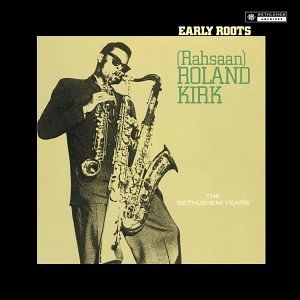
But rather than posting 'Mr. PC' or 'Cousin Mary,' my two favorite tracks on Giant Steps, I thought I'd sum things up with a pair of Rolands. (Insert synth joke here.) If Roland Alphonso got me tuned in and turned on to saxophones, Roland Kirk kept me a believer. While Alphonso seems to float on a haze of ganja with a syncopated populism, Kirk (at least on this 'early roots' record from 1956) provides a sort of jazz history lesson without resorting to imitation. Kirk was invoking the greats from the jazz shrine long before there were any college courses on Jazz History or African-American Music Appreciation. So while you get to hear the history of jazz—a little New Orleans, a heavy dose of Bop, and a bit of the blues—in Roland Kirk's early work, you can also trace my personal music history to the point of being proud to own records like this and gloating to Patrick (and you blog-readers) about this record rather than hiding it.

It should also be noted that Roland is playing three different types of saxophone simultaneously on 'Triple Threat.' Find out more about Roland Kirk.

(Buy Roland Kirk Early Roots: The Bethlehem Years at Amazon.)

(Buy Roland Alphonso Something Special at Amazon.)

[Mr. T: Again, you don't know my M.O. If you know my M.O. I was punk rock before punk rock came in!! Dig?!]


Let Me See That Jelly Roll

1274 comments


Jelly Roll Morton - I Thought I Heard Buddy Bolden Say

Usually I hate it when people write on their records. It’s a phenomenon you see a lot when you get used records at thrift stores and libraries; apparently a lot of people felt the need to put their name on their Barbara Streisand and Jerry Vale and Herb Alpert & the Tijuana Brass records, as if the records that the Salvation Army can barely sell for fifty cents were at some point in danger of being stolen from their collection. The only exception to this general rule that I’ve ever come across was a message scrawled on a copy of Jelly Roll Morton’s I Thought I Heard Buddy Bolden Say that I found at a discount record store in Buena Park. Written in a sloppy handwritten scribble across the back of the sleeve, it advertised: “What black New Orleans did for all you ignorant assholes.” I’m not sure who exactly this note was intended for or why this previous owner was so hostile, but the message was clear to me – if I didn’t buy this record I was an asshole. And an ignorant asshole at that.

If I were ever to organize my records autobiographically, a la Rob Gordon, my route to Jelly Roll would be a convoluted one. I can’t point to any one artist that led me back to him, or even any kind of six degrees of musical separation. It was a combination of new friends with new musical tastes, developing an older and more open-minded ear, a television documentary, a giant plastic chart of jazz musicians and a book, named after a Jelly Roll song, called Black Bottom Stomp. Before ever hearing a note of Morton's music, before finding the vandalized vinyl that finally convinced me to buy one of his records, I was enthralled with his story told in that book. As a kid raised during the hip hop generation, Yo! MTV Raps my most consistent afterschool baby sitter, the closest I got to jazz appreciation was Pete Rock beats. I thought of all jazz as boring Kenny G smooth jazz. Even the good jazz I had been exposed to, the requisite Miles Davis albums in my stoner friends’ CD players, never really captured my interest. But Jelly Roll was different.

Jelly Roll Morton, born Ferdinand Lamothe, was a former pimp from the Durty South who got his start playing piano in the parlors of brothels in New Orleans’ infamous Storyville District. He had a taste for expensive clothes, fine tailored suits and gold teeth. He would battle other piano players on stage, write anthems about himself (“The Original Jelly-Roll Blues”, “Mister Jelly Lord”) and frequently engaged in a level of braggadocio that would rival the most self-referential rapper, not only claiming to be the best jazz piano player of all time but insisting that he was solely responsible for inventing jazz. His songs were filled with sexual suggestions (his early Storyville lyrics being especially explicit) and even his nicknames “Jelly Roll” and “Winin’ Boy” were references to his own sexual prowess. At one point late in his career, when his popularity had faded and he was reduced to playing in seedy bars, he was stabbed in the head.

This was a jazz musician I could get down with.

“I Thought I Heard Buddy Bolden Say”, recorded in 1939 by Jelly Roll and one of the many incarnations of his Red Hot Peppers, is considered by many to be the first jazz tribute song. The title is nicked from a line from Buddy Bolden himself and pays respect to one of New Orleans’ earliest jazz legends. (Although Morton, in order not to contradict his claim as the “Originator of Jazz”, said he considered Bolden to be a ragtime player.) Most of Morton’s biggest hits, “Grandpa’s Spells”, “Wolverine Blues”, “Black Bottom Stomp”, and the now standard “King Porter Stomp”, are instrumental. “I Thought I Heard Buddy Bolden Say” is one of the few commercially released recordings that feature him singing, and his voice is an all-too-rare treat.

When I first discovered Jelly Roll it opened a whole new world of jazz to me, it gave me a benchmark of quality to look for. Since then I’ve tried to catch up with a genre that I’ve found to be just as exciting and relevant as the popular music I grew up with. The record store I bought I Thought I Heard Buddy Bolden Say at has since closed down (the fact that it was right next to a giant Tower Records might have had something to do with it) so I don’t know how good the chances are of me ever running into the person that wrote on the back of my record. But I’d like to find them, and thank them, and tell them all about what Jelly Roll Morton did for an ignorant asshole like me.


Filling in Counters = Punk Aesthetics

1342 comments

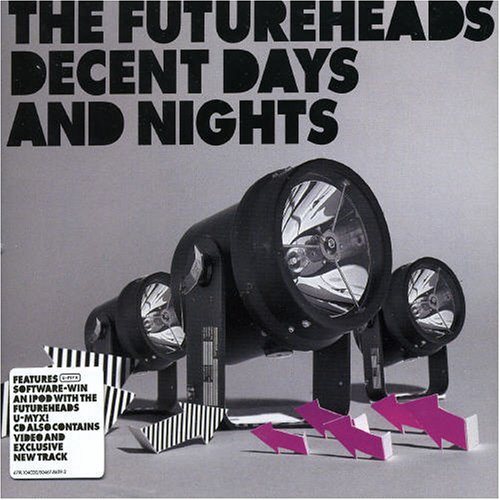
The Futureheads - First Day

The Futureheads - Decent Days and Nights (Max Tundra Remix)

It was a big week for me. I had one of my last painting crits at school and I started a new job. I've started a few new jobs at this point in my life, but never the first-job-outta-school. It's the mythological transitional period you'll tell your grandkids or future students about. These stories seem to go two ways: Either the big pay off for working so hard in College or the most depressing, College-was-a-waste tales of misery and torment. Quite frankly, after nearly a decade in 'higher education' I am totally sick and tired of these stories. I don't want to hear about your post-art-school blues or your $100,000/year job straight outta school. And yeah, we all have loans and debts to pay off but wasn't the whole point of paying for that degree to ensure no further minimum wage jobs? It wasn't a noble sacrifice; it was an investment.

And with all that baggage I show up for my first day as real-life, all growed-up Graphic Designer. One thing I learned from punk rock was the importance of a uniform, so I arrive in my Steve Madden shoes, messenger bag in tow, and gray cords from Modern Amusement. And actually, getting out of the apartment/studio, dealing with people new, different and completely opposite of myself, and learning the systems and idiosyncrasies of a whole new environment, is pretty invigorating. I'm certainly not the most gregarious person but there's something about a 'team effort' that motivates me. So after a whole week at my new job, I'll relish this weekend, but not entirely dread going back on Monday. And all that work and money that went into college is worth it just to not feel that dread and anxiety. Maybe I'm really lucky to have found a line of work that I can be passionate about and get paid decently.

And of course, before I left on Monday I burned a CD of The Futureheads because like it or not I knew this song would be playing in my brain all day long. And how often can you mutter-sing "You are so lucky on your first day...First Day!" and really feel it?

The Futureheads might just be one of a select cadre of bands that represent most of the things that Patrick and I look for in music: unique vocals with lots of harmonies, genre-staddling, punk aesthetics, and just damn well-written tunes. Just to give my blog partner some ups, he showed this to me on imported vinyl way before the US release date. And because I feel a little guilty just giving you a readily available mp3, I've also posted this remix from the Decent Days and Nights Pt. 2 import single by Max Tundra.

(Buy The Futureheads from Amazon)

(Buy Decent Days and Nights Pt. 2 featuring Decent Days and Nights (Max Tundra Remix) from Amazon)


Gleaming the (White) Cube

1220 comments

King Brothers - Oh Shit!

In Brian O’Doherty’s influential 1976 essay "Inside the White Cube" he documented the ideology of modern "white wall" art galleries, where each work is completely isolated from its surroundings and thereby from anything that would detract from evaluating the art on its own. O’Doherty makes the point that the archetypal image of 20th Century art is not any one painting, photograph or sculpture but the "white, ideal space" behind them: the white cube. It’s a concept that’s interesting to me but, as with most things in life, I only really care about how I can relate it to pop music.

How important is the context of a song? Is Radiohead not allowing single songs to be (legally) downloaded on the internet to preserve the integrity of their albums completely absurd and pretentious? I think most of the meaning I attach to songs has to do with those foreign intangibles that infiltrate the white cube and redefine the song - hearing it in a certain place, with a certain person or at a particular time in your life. And that’s part of the fun of music; taking songs out of context, jumping through genres, criss-crossing between eras, putting a song on an mp3 blog or putting together that perennial mp3 blog predecessor, the mixtape.

I had a whole post ready to go for today, but listening to the Penpals track Jeff posted yesterday brought on a whole flood of memories and sent me scrambling back through my record collection to dig out my King Brothers album. I first heard both of these Japanese bands on a mixtape Jeff made me a few years ago. I had known Jeff for a little while; we were in an Anthropology class together at community college and had stayed in touch, mostly due to a fanboy crush I had on a band he was in at the time. Later he started dating my roommate and we hung out more, talking about music in the early hours of the morning over coffee and cigarettes on my front porch. Back in those days, and for probably longer than a lot of people, we shared a staunchly old school passion for mixtape making; recorded on cassette tapes only, with hand-written track listings folded inside. On the first tape Jeff ever made for me the Penpals’ thirty seconds of pop perfection was buried towards the end of the first side and I used to listen to that song over and over again (back when over and over again meant actually getting up and hitting the rewind button after every listen, not just setting iTunes on repeat). There was also the Moon and Sixpence, a band I’m sure will be up on our blog at some point; Chisel, a band that’s been on the blog already; and I’m not positive but probably that Starvations song that Jeff has admitted to putting on every mixtape. And then there was the King Brothers.

Kicking off side two in a sweet hum of feedback, when the King Brothers started playing it was so deafening I had to turn down the stereo. They weren’t exactly doing anything new, but they were doing exactly what I happened to be looking for. And itt wasn’t anything I hadn’t heard before – I’d just never heard it done that well. I guess you could call them a garage band, they have that kind of sloppy 60’s lo-fi feel, but they’re a power trio in the best sense of the phrase, more Blue Cheer than Blues Magoo. Enormous, loud and brutal but melodic and with enough catchy harmony and stomping groove thrown in to keep it from getting monotonous. "Oh Shit!" was the song that introduced me to the King Brothers and it’s also the lead track on their self-titled 2001 record on In The Red, which I bought almost immediately after hearing them. The song is a pretty good representation of the band, but they’ve got more tricks up their sleeve that keep the whole album interesting and definitely worth buying.

It’s also a really good song to put on a mixtape.

(Click here to buy it on Amazon.)

This is officially our 25th post on Cacophony and Coffee, which might not seem like much, but considering Jeff and I talked about doing an mp3 blog for months before we ever got off our asses and actually did one, it certainly feels like an accomplishment. It’s a lot of fun sharing our record collections and it saves our non-music-obsessed friends from having to hear us rant about how good the Silver Surfer song is. So, thanks for reading, and please feel free to leave us comments (click on the number next to the title of the post) or email us. All I’m getting in my inbox right now is spam in foreign languages.


Feel No Shame About Shape

2250 comments

Penpals - Tell Me Why

Sometimes dating someone can make you ten times cooler, ten times geekier, and very rarely it can do both at the same time. Certainly the upside to watching volume after volume of fan-sub anime was discovering the intro song to Berserk. The series is available in America now, but back then it was like finding the perfect record for your collection at a garage sale: rare, a gem in the rough.

Maybe not everyone goes for the Japlish/Engrish lyrics or the sugary sweet power pop the Penpals dish out, but I spent hours and hours and a lot of money just one import CD so I could have this 30 second clip from Berserk's intro. A full album is available, with the FULL version of the song, but still at import prices. But at least with the internet all you have to do is click.

I tried to track down an mp3 of the full version but with no luck... So I hope you enjoy every second of Penpal's Tell Me Why because I paid a buck for each of them. (It's really a minute, fifteen.. but I couldn't do any wordplay with that...)

Here's the lyrics, though I doubt they'll help you understand:

Feel no shame about shape
weather changes their phrase
even mother will show you another way

So put your glasses on
nothing will be wrong
there's no blame,there's no fame,it's up to you

The first words should be found
whatever holds you back
I can get it off

Tell me what you want
I don't know why are you afraid
Tell me what you wanna say
I don't know why,but it's too late

(Buy Americaman at Amazon)


Don't Leave It All Unsaid

3388 comments

Morrissey - Sing Your Life

I’ve been wanting to post some tracks from Morrissey’s upcoming album Ringleader of the Tormentors for some time now, but it seems like every day another blog has already beaten me to the punch. I think the album has been completely leaked at this point, and at the very least the single (which is the best song on the record anyway) is widely available enough to make it redundant for me to post it. It is amazing to me though how consistent Morrissey has been in his solo career. He continues to put out good records after over 25 years of making music and by now easily has a body of work on his own that can rival, classic for classic, that of The Smiths. I know there is an unspoken rule in rock and roll that if you were in a seminal band, your solo career can never be as good. But Morrissey has proved time and time again to be the exception. And in fact, to the objection of most die-hard Smiths fans I know, my favorite Morrissey song is from one of his solo records.

According to Wikipedia, Kill Uncle is "generally considered Morrissey’s poorest album." While I would be inclined to agree with this assessment, I do think it says more about Morrissey than it does about Kill Uncle. I would also agree that Beatles For Sale is the worst Beatles album, but it’s still better than a lot of bands’ best album. Morrissey is always at his best with a collaborative ear to lean on - Johnny Marr in the Smiths, Stephen Street on his debut solo album, Alain Whyte and Boz Boorer on his two classic 90’s albums; but Kill Uncle finds him all but on his own, with Fairground Attraction guitarist Mark Nevin providing little help. Musically, the album is substandard; generic jangly pop with the occasional garishly syrupy string section, and the production is often solely characterized by Clive Langer and Alan Winstanley’s infatuation with reverb and overdubbing. Yet Morrissey’s lyrical brilliance and wit manage to shine through and he still turns out several excellent songs, though none quite as endearing as the album’s third track "Sing Your Life".

"Sing Your Life" was released as a single in 1991 but failed to do much on the charts. It’s not surprising, as the song doesn’t leave the immediate impression that singles like "Suedehead" and "The More You Ignore Me, The Closer I Get" did, in large part due to its shattering one of the cardinal rules of pop songwriting: its bridge is catchier than its chorus. But that’s the best part of the song, that’s the reason why I can listen to it over and over again and it has endured long enough to stand out as my favorite Morrissey composition. It’s structured like a film, subtly building to the climax (ushered in by the superb couplet: "Make no mistake my friend/Your pointless life will end"), but throwing in enough memorable moments along the way to make it worth listening to the whole song over again to get to that ending bridge. I know Kill Uncle is not as good as Strangeways, Here We Come or Vauxhall and I, and it will never be as important as The Queen Is Dead, but in that instant, that blissful last minute of "Sing Your Life" feels like the most perfect thing he’s ever recorded.

The old cliché about Morrissey, that his music is depressing, seems all the more absurd when listening to a song as uplifting as "Sing Your Life". Nothing quite brings me out of the doldrums on a bad day like Morrissey telling me that I have a lovely singing voice. And when I’m happy, when I’m having a good day and feel like singing, I can always be assured that all of those who sing on key... they stole the notion from him and me.

(Click Here to buy it from Amazon.)


I Hope You Have the Cody Chesnutt CD

1191 comments

Michael Andrews - Signs
Michael Andrews - Heaven in Five

I have to completely ignore the film or this post will be at least three screens long, but one of the most striking elements of Miranda July's film, Me and You and Everyone We Know, was the score. As I watch a man light his own hand on fire in some impotent gesture to ceremony, the garage sale electronic symphony instantly forces me into perspective: while naive, quaint and not-entirely-helpless, the characters and instrumentation exude an inner beauty in their futility and failures.

Michael Andrews came into film score composition when his band, The Greyboy Allstars, was asked to score The Zero Effect, Jake Kasdan's first feature film. He also scored the cult classic television show, Freaks and Geeks, and the ubiquitous MySpace-must-see, Donnie Darko. In fact the cover of Tears for Fears' Mad World (with Gary Jules on vocals) was a number one hit in the UK and charted across Europe. He's also done production work like Metric's Old World Underground.

Andrews read a copy of July's script and it blew him away. Meanwhile, July listens to the Donnie Darko soundtrack and thinks Andrews is way out of her league but concocts strategies to approach him anyway. Like the characters in the film, fate brings them together.

Rather than simply commission Andrews to score the film based on images or dialog, July becomes an integral part of the composition. She doesn't want the music to sound "like movie music." She wants it to sound as if someone who didn't quite know how to play music had performed it. The pair sought to create mistakes that somehow work, happy accidents.

Andrews crafts the sound with an orchestra of vintage synths, garage sale Casios and drum machines. He works with the concept of using sterile, amateur and inorganic instruments to create emotional and magical music. One of the film's musical motifs features a melody played on a calculator with a built-in 12-note keyboard. Andrews also makes use of a modified piano where the hammers hit a piece of felt rather than the strings directly.

Andrews' hit Tears for Fears' cover, Mad World (with Gary Jules), was just posted yesterday over at Indie Girls Fly Kites. So go download that too...

(Buy Me and You and Everyone We Know Soundtrack at Amazon.)

(Find out more about the Me and You and Everyone We Know film... winner of just about every indie-film award and deservedly so.)


There Can Be Only One

598 comments

Annie Lennox - Train In Vain

Sheena Easton - Sugar Walls

I was getting exasperated trying to come up with some good Irish music to post today. I don’t like U2 much, I like Thin Lizzy alright but I don’t have much of their stuff. I love Stiff Little Fingers but that seemed a little obvious – everyone has "Suspect Device" don’t they? Same with Van Morrison/Them. I figured other blogs will cover those bases. And obviously all that Flogging Molly and Dropkick Murphy’s crap wasn’t an option. So what’s an Irish boy to do on his namesake’s holiday? But then I got to thinking - why don’t we celebrate any Scottish holidays in America? I guess there really aren’t any unique Scottish holidays, just Boxing Day and stuff that the rest of the UK celebrates too. And celebrating St. Patrick’s Day is easy – you just wear green and drink. But I don’t think Scotland gets enough credit; there’s more to Scotland than haggis and kilts and sword-fighting immortals (and whatever kind of strange Scottish yak is in the picture above) - so while the rest of the world is listening to the Pogues, today I’m all about Franz Ferdinand and Donovan and maybe just a little Annie Lennox and Sheena Easton.

Annie Lennox’s version of The Clash’s "Train In Vain" is from her covers album Medusa. I must admit, I’m not a huge Annie Lennox fan (and, conversely, I’m an enormous Clash fan) so I was a little skeptical when I first heard this track. But once those drums kicked in I was sold. The jazzy stand-up bass is a good start but throwing those hip hop sounding drums on is a stroke of genius. And the gospel back up vocals are a nice touch as well. If you ever wondered what it would sound like if Mick Jones took it to church, here you go.

And Sheena Easton’s 1984 dance hit "Sugar Walls" is fucking epic. It should be reason enough for the Scottish to get their own American-diluted holiday. Written by Prince in his breathtakingly prolific mid-80’s prime (when he was also writing, producing and playing every instrument on successful albums by The Time, Sheila E., Vanity 6 and his own records), "Sugar Walls" is one of the catchiest pop songs about genitalia you’ll ever dance to. It’s kind of like the 80’s version of "skeet, skeet, skeet." Wikipedia has a pretty hilarious article about it here. (Just in case it wasn’t clear what "Sugar Walls" was about.)

That’s it for today, a little shorter than usual, but unfortunately I don’t have that much to say about Annie Lennox and Sheena Easton. I just like these songs. Hopefully you will too. Slàinte mhath.


(Click here to buy Medusa on Amazon.

(Click here to buy Sheena Easton's Greatest Hits on Amazon.)


“There’s no crotch factor playing the keyboard.”

1581 comments

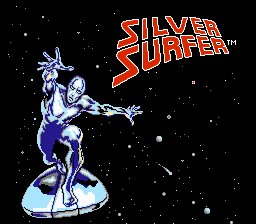
Tim and Geoff Follin - Silver Surfer (NES)
Tim and Geoff Follin - Gauntlet III: Subtrack 2 (Commodore 64)
Tim and Geoff Follin - Plok: Akrillic (SNES)

Somehow or another I got onto this Nintendo trip recently. I never actually owned the system growing up; I always played it at friends' houses. On a spur, I did a quick look online at latest emulators and games ports. It was scary how quickly I had a little NES running on my Mac OS X. The advantage to coming into the NES emulation game so late is that the emulators are at reliable versions and a good number of games are available. And at an average size of about 150k the ROMs download quicker than mp3's and award with an instant gratification the childhood urges your allowance had suppressed.

I never played Silver Surfer but the Marvel character was always fascinating to me so I went ahead and downloaded the game. Without having to do the ritual puff-puff-blow, my Mac was soon swirling with 8-bit blipps and blopps. And within the first few seconds I realized I had stumbled upon a gem. The game plays out a lot like 1942 with the WWII plane replaced with Norrin Radd post-Galactus conversion: the Silver Surfer. But it's the musical soundtrack that dwarfs any possibility this game had of being remembered. In fact, the soundtrack seems to be the only redeemable factor of this lackluster comic-to-console video game.

Written by a pair of brothers, the Silver Surfer theme opens with an analog descending scale that sounds like it could be on the radio today. The driving beat and bass line propel the song into low resolution dance frenzy as the echo-y lead bounces from planet to planet.

Between their co-written tunes and solo work, the Brothers Follin account for a good number of games across the chronology of home consules: the Sinclair ZX Spectrum, Commodore 64 and Amiga, NES, Super Nintendo and even Dreamcast and PSP. (Tim even did the music for the 2003 Starsky & Hutch game.) I couldn't get soundchip emulators to work for every system the Follins wrote music for, but I did compile a small sampling, including Gauntlet III from the Commodore 64 and Plok from Super Nintendo.
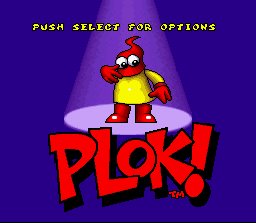
As the technology advances to the 16-bit Super Nintendo, you can hear more clearly Tim and Geoff's influences. While the limited technology of C-64 makes for innovative uses of the technology, the more 'realistic' sounding SNES seems to allow the composers to get closer to 'what they want.' The soundtrack to Plok spreads across genres from cowboy novelty to pulsing 90s dance, but Akrillic sounds closer to The Stranglers or Yes. At times it slips into tragic sampled instruments that come off as too-early 90s nostalgia... maybe the next generation will be ready for that.

Tim Follin shared these thoughts on composing for the various systems with the now defunct webzine in 1998:
The thing I liked about computer music, especially on the C64, was that it was like playing an instrument in its own right. I also liked the fact that you couldn't be pretentious with something that sounded so unreal. But this is also its curse. The general public thinks computer music and computer sound FX might as well be the same thing; unless you know the limits of the sound chip, you won't understand what the composer is doing. If you expect an orchestra and get an electric guitar solo, you'll be disappointed. If you've never heard an electric guitar, you'll just be confused!
Tim recently retired from the console music scene and is focusing on low-budget films. Geoff has become a school teacher.

Download all the emulator music you can from the Follins (and a handy 'discography') at The Follin Drome.

And find out more about Tim Follin at his expertly designed website: Dr. Follin's Home Surgery.


Where Brooklyn At?

5 comments


Aaron Copland - Fanfare for the Common Man

"A Spike Lee Joint." There aren’t many words that get me more excited about a movie than those four. It’s tough to make out but if you look closely at the preview of the new film Inside Man you’ll see the credit "Directed by Spike Lee." It’s a shame that the name of the most important filmmaker of the last two decades has to be buried in his own marketing campaign (although at least he can console himself with being in the same elite company as fellow controversial genius Woody Allen), but it’s something I’ve gotten used to after many years of being a Spike Lee fan.

I saw Spike’s masterpiece Do The Right Thing when I was 10 or 11 years old and I couldn’t get hyperbolic enough if I tried on how profound it’s effect on me was. Not just in terms of my love for cinema but my way of looking at the world, and to no small degree my taste in music. Music has always been paramount in Lee’s films - Public Enemy’s anthemic "Fight The Power" in Right Thing, his father Bill Lee’s elegant jazz scores in his early work, the devastating use of Sam Cooke’s "A Change Is Gonna Come" at the climax of Malcolm X; but often overlooked in his body of work is the way Lee sets the physical poetry-in-motion of basketball against the dynamic orchestral work of Aaron Copland in 1998’s He Got Game.

It seems like an insane notion, not just exclusively scoring his film with Copland’s work but often placing it back to back with Public Enemy (resulting in one of the more surreal credit wipes in film history – "Music by Aaron Copeland" fades to "Songs by Public Enemy"). But it works and it works beautifully. As Spike explained in an Independent Film Channel interview: "Aaron Copland is one of the American composers and basketball is an American game. I just felt that the largeness and the scope of his sound… when you hear “Fanfare for the Common Man” you hear America."

Copland, born in 1900 in Brooklyn not far from where Lee himself grew up, wrote the short brass and percussion piece "Fanfare for the Common Man" in 1942 at the request of Eugene Goossens, then conductor of the Cincinnati Symphony Orchestra. The fanfare, recorded with Copland conducting the London Symphony Orchestra and originally used as an introduction to orchestral concerts, later became the main theme of the fourth movement of Copland’s Third Symphony and has since become one of the most well-known pieces of 20th century classical music. But when I first saw He Got Game nearly eight years ago, I was much more knowledgeable about Public Enemy than I was about Aaron Copland. And while "Fanfare for the Common Man" felt somewhat familiar to me at the time, it seemed to be one of those songs that most people have heard but few my age could name.

Looking back at He Got Game last night (as part of my inconsistently annual consumption of all things Spike before the release of a new film), I was struck by how much I was genuinely moved by both the movie and that song in particular. Removed from its usual background context, "Fanfare for the Common Man" holds up as an astonishing and epic piece of music. It’s disappointing to me that for years I didn’t even know the name of this song; it deserves to be thought of as more than just an anonymous motif floating in the classical music ether, fodder for commercials and cartoons and sitcoms. And I think a similar argument could be made about Spike Lee. Too many people dismiss him as a filmmaker, focusing on his outspokenness or his courtside behavior at Knicks games instead of his talent. Could you imagine if Aaron Copland had to hide his name from the credits of his own composition?

(Click here to buy the He Got Game soundtrack, featuring 13 songs composed and conducted by Aaron Copland, on Amazon.)

(The latest Spike Lee Joint opens in theaters everywhere March 24.)


Too Smart for the Garage; Too Raw for the Lecture Hall

4 comments

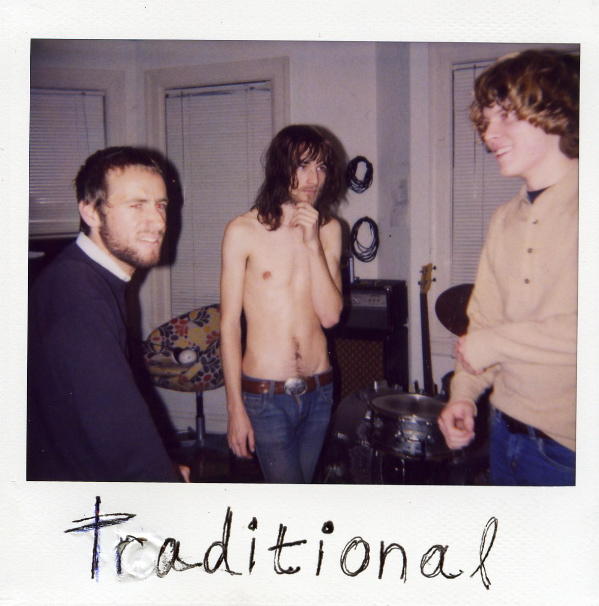
The Traditional Fools - Please
The Traditional Fools - Rock and Roll Baby>

Orange County has a tendency for squelching the creative flame and the two possible means for survival seem to be either clustering into niche groups or taking any chance to just get the hell out of town. One of the most frustrating things with trying to continue to live in OC is that whenever a good band just starts to get going, someone moves away or decides to go to college. But sometimes these can be fortuitous departures or new beginnings.

Moving away from home can be isolating and lonely and sometimes loose knit friends can be brought back together. Andrew, David and Ty were known to be seen and heard around the scene, or at least my corner of it, in bands like The Epsilons and The Clamour but it wasn't until all three of them relocated to San Fransisco this past semester that The Traditional Fools were born. David ran into Ty at Amoeba and once Andrew moved up, it was on.

Load up the USF dorm room with drums, guitars and amps, borrow a four-track, upload the mp3's onto your new MySpace page, and, viola, you're a 'real' band.

The trio shares an obsession with garage rock past and present, from the Mummies to Redd Kross, from Link Wray to Billy Childish. But the marked departure from a simple clone or neo-revival, is Traditional Fool's strangled sound and lyrical approach.

The guitars wail away at the same blues progressions that have echoed out of suburban garages for the past five decades or so, but they don't sound like the drenched-in reverb or Blues Screamer Distortion you're used to. The sound is closer to Jon Cougar Concentration Camp or Scared of Chaka than Chocolate Watch Band or The Troggs.

The lyrics, when audible, are far removed from the clichéd garage rock material. And this is where the missing piece 'falls' into place. The other shared obsession among the band is The Fall. The focus of the lyrics seems to be more on surrealism or absurdity and how they sound rather than conveying a simple message or telling a tale of unrequited romance. I'm told the ridiculous lyrics to "Rock and Roll Baby" were inspired by Guitar Wolf, and at times I'm even reminded of Pere Ubu.

Maybe it's quite simple: garage rock goes to university.

Two more songs are available at The Traditional Fools' MySpace.


This Is A Sampling Sport

4 comments


Scarface - On My Block

Roberta Flack and Donny Hathaway - Be Real Black For Me

Roberta Flack & Donny Hathaway, the eponymous 1972 duets album from two of soul music’s most enduring vocalists, is not a particularly rare record. It would look more obvious than impressive in your collection; it’s not the kind of record you’d have to soak the label off of so that DJs wouldn’t know what it was. But it sure was a pain in the ass for me to find. I’m the world’s laziest record collector. I’ve never traveled through the South knocking on people’s doors asking if they had crates I could dig through, I don’t even look at eBay for records. But I have a short list in my mind of records that I want and whenever I find myself at a record store I’ll look for them. And for a long time Roberta Flack & Donny Hathaway was at the top of my list.

Back in the summer of 2002, back when I had cable TV, I was spending a lot of time watching Rap City in the middle of the night. And of all the songs Big Tigger introduced me to that summer, I was most enraptured with Scarface’s "On My Block". The video is absolutely brilliant, a sort of visual palindrome following Scarface around his neighborhood in Houston, bringing to life both the imagery and the ideas laced throughout his lyrics. Despite the limited airplay the video got, it affected me enough to go buy the album.

The Fix, Scarface’s seventh solo album, is the kind of record that makes you happy to actually pay Suggested Retail List Price for a CD. The packaging is great, from the cover to the liner notes folded up and stuffed in a little plastic baggie inside, and the music is solid from start to finish. Although I would say "On My Block" is the standout track, this is much more than a single padded with album fillers. Guests are kept to a minimum; Jay-Z and Nas are both at the top of their game on their respective contributions and the two Kanye West produced tracks are flashes of his future genius, but the focus is always Scarface’s startling cinematic flow. He’s a master storyteller, not just telling a conventional narrative, but building upon layers and layers of illustration to transport you into his world. I’ve never been to the Southside of Houston, Texas but Scarface creates the experience for me with a series of verbal snapshots of dominoes, Swisher Sweets, Vietnam vets and chromed-out Impalas.

But the more I listened to "On My Block" the more I became transfixed with that piano sample. It’s a simple pattern, but evokes so much feeling in just a couple of notes. From the liner notes of The Fix I knew the sample was from a song called "Be Real Black For Me" by Roberta Flack & Donny Hathaway and I became obsessed with finding that song. I figured that, loving "On My Block" like I did, "Be Real Black For Me" was likely destined to be my favorite song of all time. Eventually I gave up looking for the Roberta Flack & Donny Hathaway LP and settled for a CD copy I found at Amoeba Music in Berkeley. It wasn’t going to have that same dusty nostalgia that it did on Scarface’s appropriation of it, but at least I was finally going to be able to hear it. And you know what? It was disappointing.

Finding that song was a turning point in my musical education. It’s not a bad song, but all I can think of when I listen to it is how much better it sounds with some cracking drums elevating the piano, with an introspective MC inside that beat, expertly matching the tone of his back-in-the-day tale with the emotions inherent in the crackling vinyl. I had it all backwards - the sample didn’t make "On My Block" better, Scarface made the sample better. It’s something that people who are anti-sampling don’t seem to understand; they seem to think all sample-based hip hop is like Diddy rapping (badly) over a Police song. But in a song like "On My Block" a couple seconds of music from another era, chopped and looped and adjusted, are used as just one element to construct something entirely new and, in this case, better. I’ve had countless arguments with professors and sometimes peers over sampling; theft or art, compositional laziness or conscious artistic decision. I could have saved a lot of breath and just played them these two songs.

Click here to buy The Fix.
Click here to buy Roberta Flack & Donny Hathaway.


It's Alright To Mistreat Me. It's Kinda What I'm Used To

2 comments

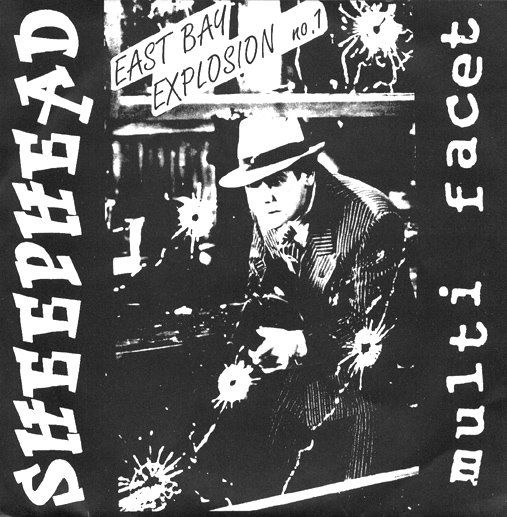
Sheephead - Shooter

With nothing to do on a Friday night, Dathan and I headed out to Koo's Cafe (back when it was still in Santa Ana). I think Litmus Green was playing one of their ubiquitous Orange County shows, and like I said, we didn't have that much else to do. I was leaning up against the pinball machine in the back corner when five young men in matching suits, devilocks or pompadours took to the stage. (It was really just a section of floor designated as "the stage.") According to the liner notes of their split seven-inch with Multi Facet, ”Sheephead always wears fine suits. It's a statement; they're just well dressed. They're also usually well-mannered young lads...”

My jaw dropped as Sheephead unleashed an unabashedly poppy but loud and angry and dark onslaught of raw rock and roll. Imagine The Misfits obsession with horror and gore replaced with a gritty, personal portrayal of life in a place with the worst of both the rural small town and the urban big city: Antioch.

“Shooter” describes the relationship with an estranged father that teeters on the edge of melodrama. But the beat remains so danceable and the melody so hauntingly sincere, that when the chorus hits, "And if I'm crying it's just because I'm happy / Not because you remind of me my dad," you can't believe that they make it work so well. By the final chorus, Sheephead has you singing along to the melancholic lyrics of betrayal... but somehow there's a tone of acceptance, recovery or closure. I think the final lyrics sum it up best, "And everything he ever said never meant a goddamn thing anyway." And curiously enough, that snippet at the end, is the catchiest part of the song.
Sheephead still has copies of the split seven-inch this song comes from, (East Bay Explosion No.1, on Zafio Records), as well as a full length CD. They also have four songs on their MySpace page available for streaming. (“March of the Flying Squirrels” appears on this split seven-inch as well)

Sheephead's MySpace also features this photograph:


Who Put The Bomp In The Power Pop Shoo Bop Shoo Bop

7 comments


20/20 - Giving It All

The Nerves - When You Find Out

It seems like whenever I hear people talking about power pop (which, admittedly, is not as often as I’d like) they talk about the Midwest. And well, it makes sense. You can picture bands like The Raspberries and Blue Ash, stranded in Ohio, or Pezband and Cheap Trick (although of course a true power pop aficionado would only admit to liking early Cheap Trick) stuck in suburban Illinois being so far removed from the “happening” scenes that they didn’t realize it wasn’t cool to be playing this outdated Beatles-esque bubblegum music. That fantasy kind of dissipates however when you realize that some of the best power pop of the mid-70s was coming out of Los Angeles on the seminal Bomp! Records.

In fact, Bomp! claim to have actually invented the phrase "power pop" and while this seems like a dubious boast at best (most sources attribute it to Pete Townsend circa 1967), you certainly can’t deny their contribution to the genre. The Flamin’ Groovies, The Plimsouls, Shoes and even The "What I Like About You" Romantics all released early singles on Bomp! before making the jump to major labels. 20/20 and The Nerves were two legendary bands in the L.A. power pop scene that Bomp! was documenting.

"Giving It All" was 20/20’s first single, a blistering burst of crisp harmony and catchy melody with an absolutely irresistible soaring chorus. And I’m not sure if the English-accented "oh oh" bridge is a knowing wink at the Beatles or just an outright theft, but it’s pretty brilliant either way. The band went on to release two full length records on Bomp!, received some moderate radio play and somehow scored an appearance on American Bandstand (which is shockingly not yet available on youtube) before buying some synthesizers and jumping ship to a major label. Unfortunately 20/20 were caught in the power pop backlash of the early 80’s brought on by the annoyingly massive success of The Knack and were dropped from the label before their third record could be released.

The Nerves met with a little more commercial success than 20/20, mostly due to their "Hanging On The Telephone" being a Top 10 hit for Blondie and included on the album Parallel Lines (and currently being covered by someone else in a commercial that runs about every 15 seconds on TV). "When You Find Out" is from the same four-song EP as "Hanging On The Telephone", the band’s only recorded output, released on Bomp! in 1976. All three members of The Nerves, Peter Case, Jack Lee and Paul Collins, shared songwriting and vocal duties (Case sings lead here), which may have led to their premature break up. There was too much talent to be contained in just one band. Case and Lee went on to sporadic Billboard success with the aforementioned Plimsouls and Collins formed The Paul Collins Beat. But the music snob in me, and power pop is nothing if not a music snob's genre, feels the need to tell you - I only like their early stuff.

(The Nerves’ self-titled EP was recently re-issued by Bomp! as a commemorative 10". 20/20’s records are out-of-print but their early singles can usually be found on any good power pop compilation.
Click here for the Bomp! Records mail order catalogue)


Fake Communication Has A Big Time Out

143 comments

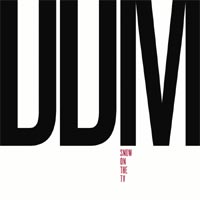
Dance Disaster Movement (DDM) - Turn On “On”

Late Spring hinted at warmer weather and longer nights just after dusk at a nondescript warehouse in Costa Mesa. I had convinced myself that I was over whatever illness I had been struck with the previous week. (As I recall, I thought it was just a bad reaction to Melatonin but it turned out to be the onset of Juvenile Diabetes.) Dim lighting in a dingy garage-space and loud, youthful and noisy music left me with one desire: to dance. The Flying Saucers and The Pomp provided destructive garage punk, Miracle Chosuke stroked their egos in 7/8 time, and Dance Disaster Movement blasted out the building's foundation.

After DDM's set, Kevin stepped outside, where I was chugging 2-liter bottles of water and smoking a cigarette. He said, "This was the best show Costa Mesa has seen in decades." And whether it was too many $1 Pabsts in my reduced-to-100-pounds frame or a blood glucose level of around 600, I wholeheartedly agreed. It wasn't just the music or the people; it was something in the air. A sense that liberation was just within our reach, that maybe we could carve out someplace to exist.

I danced like I never danced before and when I ended up the hospital a week later I thought a lot about that night. Somehow that night I lost track of myself and was just able to be, to take in the scene. Maybe I've been trying to replicate that feeling ever since. Maybe the whole reason I wanted to start a 'dancey band' was to provide that feeling for others. It's easy to get idealistic with hindsight and it can be tempting to mythologize certain moments, but something in me really sees that night as a turning point, as an epiphany.

Since then, dance-punk has been turned into a dirty word and the pose has been taken up by all sorts of typically non-subterranean bands. But DDM keep it glitchy and repetitive enough to defy any sort of cashing-in criticism. At times Snow on the TV comes off a bit self-conscious and pretentious but I admire what they're going for. Without the minute and a half of powerdrill beats, DDM could come too close to being Rapture-clones. Without the open ringing guitars and ham-fisted synth chords, DDM would be nothing more to me than an idealized memory.

(Buy it at Insound)


Love At First Listen

4 comments


Ante-Meridiem - Thinning Air

How long does it take to fall in love with a song? There are songs I have loved after listening through just once and songs that have grown on me over the years; songs that grabbed me almost immediately and songs that, as the cliché goes, rewarded repeat listens. With Ante-Meridiem’s "Thinning Air" I was head over heels in 15 seconds.

It’s the laugh that does it. During the intro, over a sparse and lovely acoustic chord progression, with echoes of slide guitar reverberating in the background, singer Karin Jancuk breaks the sober mood with a giggle. It's the kind of studio imperfection that’s too perfect to edit out and it’s one of those strange pleasures you find in music; a passing note that might not mean anything to anyone else but for whatever reason defies me not to smile whenever I hear it.

To smile at such a decidedly melancholy song is the kind of contradiction that much of "Thinning Air"’s appeal hinges on. It's somber yet sweet. It’s a gorgeous pop song that eschews pop conventions of verse and chorus. Guitarists Fonzie de Leon and Bradley Scott Robertson create an atmospheric landscape of sound rather than worry about chord changes or melodic lines. Jancuk’s voice is achingly beautiful and haunting and at the same time unabashedly youthful and joyous. It's a sad song that makes me happy.

How long does it take to fall out of love with a song? In the last month or so I’ve easily listened to "Thinning Air" hundreds of times, leaving it endlessly on repeat and getting lost in it, riding busses and trains wearing out my thumb hitting the back button on my iPod to hear it again, and I never seem to get sick of it. I can already attach memories to it; listening to it for an entire day at work to try to forget how much I hated my job, seeing the band play it live in the miserable weeks after a friend passed away and it bringing a little much needed joy into my life for four minutes. And yet it’s too good a song to be tied to any one memory. It transcends those kinds of literal time-place connections like only truly great songs can. When I’m 90 years old and need to smile, I know I’ll always have that laugh to turn to.

(Click here to see Ante-Meridiem on Myspace)


Brent’s TV - Parisian
Brent’s TV - Hairdoo

Born from four students at Humboldt Univeristy in 1988, Brent’s TV and Appliances (the ‘Appliances’ was later dropped) brought their brand of rootsy rock-and-roll and skiffle to the people the best way they knew how: the laundromat. Imagine the scene: dozens of students and young people dancing, clapping, pounding on the warm dryers while brotherly harmonies echo over a snare drum, spaghetti colanders and a few acoustic guitars. Their jamboree-like live shows became legendary and when Brent's TV embarked on their laundromat tour of the Pacific Northwest, a caravan of ‘fans’ followed. Aaron Cometbus describes the phenomenon, “Brent's TV was really a whole group of extended friends much more than the four members of the band.”

Brent's TV released Lumberjack Days (Lookout! 36) in 1990 and quickly broke up as friends and band members moved away from Humboldt. The band reformed briefly a year later for a West Coast tour with Green Day. (Six people crammed into a 1978 Toyota hatchback... Green Day missed the first few dates but caught up after they borrowed someone's mother's car.) And aside from one reunion show two years later, Brent's TV was over.

In 1994 Lookout! released a compilation of Brent's TV material as a tag-along with a Sweet Baby compilation, Hello Again. While the bands are similar, share a history, drum set and a pair of brothers, and present a sort of proto-East Bay pop-punk, it seems a shame that Brent's TV doesn't warrant their own retrospective compilation. In fact, a few internet trolls seem to regard Brent's TV as an unlistenable predecessor to the Hi Fives. It seems Lookout! still has copies of this seven-inch, which is either a gross injustice that no one ever bought them... or a case of repressing a genuinely important record. I'm feeling slightly optimistic, so I'll stick with thinking that Lookout! has repressed this record just so that folks like me who weren't around in 1990 can listen to a bit of history, and a one of a kind sound from a one of a kind band.

The Lookout! website offers an mp3 of Superwoman from Hello Again


(Buy it from Lookout!)


The Way The Cops Converged, They Fucked Up My Swerve

4 comments


Dead Prez - Hell Yeah (Pimp the System) [ft. Jay-Z]

I’ve been obsessively absorbing pop music for so long that sometimes it seems like I can only think in song lyrics. The other day I was at In N Out and spotted a slightly nerdy red-haired teenager with glasses, a scraggly barely post-pubescent beard, a West Coast Choppers T-shirt... and a blue bandana hanging out of his back pocket. I whispered to my friend: "Look, he’s got a blue flag hanging out his backside. But only on the left side. Yeah that’s the Crip side".

I tried to think of all the possibilities of what would possess a geeky white boy from suburban Orange County to be rocking gang colors – was it just an incredible coincidence? He needed somewhere to put his bandana and he just happened to pick his back left pocket? Or have the Crips severely lowered their membership standards? I guess both those things are possible, but the most likely answer came to me from Jay-Z’s verse on the remix of Dead Prez’s "Hell Yeah (Pimp the System)": "Lil Joey got his doo rag on/Driving down the street blasting Tupac songs/But Billy like Snoop, got his blue rag on".

Jay-Z's lyrics are great for that, they're surprising applicable to many everyday situations. (I've been waiting for months now for someone to ask me what my favorite color is so I could answer that my favorite hue is Jay-Z blue). And more often than not my favorite lyrics are from Jay's guest spots. Hov is the king of the guest verse. With a chameleon flow he can switch up to match whatever style you put through his headphones and an uncanny ability to cover a number of complex ideas in a deceptively simple 16 bars, give him a good beat and he will undoubtedly turn in a great performance. And while he’s proven time and again he can breathe life into Top 40 pop (Mariah’s "Shake It Off") and run-of-the-mill blow and bling hip hop (Jeezy’s "Go Crazy"), "Hell Yeah" shows him to be just as adept at conquering the so-called "conscious rap" genre.

Dead Prez’s M-1 and Sticman both turn in capable verses, and if I had heard this in high school when their debut album Let’s Get Free was essentially the soundtrack of my senior year, I’m sure I would have focused more on them. But the 23 year old me is a little more cynical about their robbing-the-pizza-guy revolution and, with the exception of "Hell Yeah", Revolutionary But Gangsta just doesn’t seem as fresh and smart as their previous work. After all, who's more subversive – two underground emcees rapping to the choir or the multi-platinum CEO of a major record label "slinging rap to your kids"?

Dead Prez can currently be seen in Dave Chappelle’s Block Party, in theaters everywhere today.

Jay-Z can currently be seen breaking those boxes y’all tried to put him in.


(Click here to buy Revolutionary But Gangsta from Amazon)


Your Boyfriend Never Meant Shit to Chuck D

4 comments

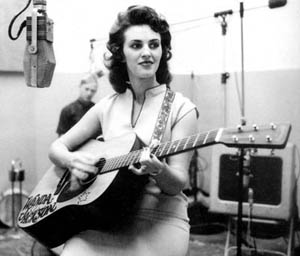
Wanda Jackson - Tunnel of Love/Funnel of Love

Here's a reverse cliche, a new snowclone, if you will: I don't love rockabilly, but I do love a great song. And there's a lot of personal taste, a mix of memories and emotions, and a whole laundry lists of intangibles that make up why someone loves a song, or thinks it's great. I want to dive into those gray areas and hear all about it. I don't want to resort to cannons, or dismissals or overly academic discussions of meter or key.

You might not like Wanda Jackson and might not have even heard of her. Apparently she has a new CD out called "I Remember Elvis" and if you want some Queen of Rockabilly hype, her website is gag-inducingly chock full of it. It would be easy to write this song off as movie soundtrack fonder or maybe something you heard on the Country Music Channel once, but for me there is something that sticks. Maybe I have a soft spot for those low, growly vocals, or maybe I can still hear this song the way I heard it first: in a low lit Airstream on the outskirts of Orange County. Maybe it's impossible to divorce your identity from music.

And I think I'm glad for that.

(Buy at Amazon)


Oh Christ! It's The Crucifucks!

2 comments


The Crucifucks - Washington

When I was 15 the Crucifucks were everything I was looking for in a band. They were loud and fast and sloppy, they had gleefully dumb lyrics about the “establishment” with brilliant song titles such as “Go Bankrupt and Die”, “Democracy Spawns Bad Taste” and “Cops For Fertilizer”, they had a name sure to piss my parents off, and best of all they had a singer with the most obnoxious, shrieking, paint-stripping voice I’d ever heard.

The voice in question, Doc Corbin Dart, started the Crucifucks (along with, bizarrely, future Sonic Youth drummer Steve Shelley) in Lansing, Michigan in 1982. Their first album was recorded two years later and was released on Alternative Tentacles in 1985. In addition to the standard punk lyrical fare about government and religion, the self-titled debut featured more comically surreal subject matter in songs like “Oh Where, Oh Where?” (a song that appears to be entirely about losing a piece of paper. Sample lyric: “I can’t find my piece of paper/I should have been more careful with my piece of paper) which hinted at Dart’s ongoing struggle with borderline personality disorder.

1987’s Wisconsin gave even more insight into Dart’s deteriorating mental health, but also featured songs that were slower, more melodic and more mature (well, as mature as you can get and still be in a band called the Crucifucks). The albums third song, “Washington” was always my favorite and would invariably be the one I played for my friends when trying to convert them to the cult of Corbin Dart. It’s not wholly representative of the band; the lyrics are much more subdued and the music is actually palatable, but the love-it-or-hate-it elements that make the band great are all very much intact. You’ll either cringe at the singing like nails on a blackboard or, if you’re like me, you’ll spend the rest of your life trying to find a band with a voice that is nearly as good.

(The Crucifucks and Wisconsin are available on a single CD entitled Our Will Be Done. Click here to buy it from Alternative Tentacles)


CACOPHONY AND COFFEE

  • OR POP HISTORY
  • OF NONEVENTFUL YEARS:
  • AN MP3 WEBLOG

Latest posts

Archives

Links

Disclaimers

  • Songs posted here are only available for a limited time and are for evaluation purposes only. If you like the music, please show your support and buy the records.

  • Feel free to contact Jeff or Patrick if you are a band, label or distributor and think we'd be interested in your music.
  • If you are the copyright holder of a song being featured on this blog and want us to take it down, let us know, and it will be removed from the server immediately.


  • Site Feed